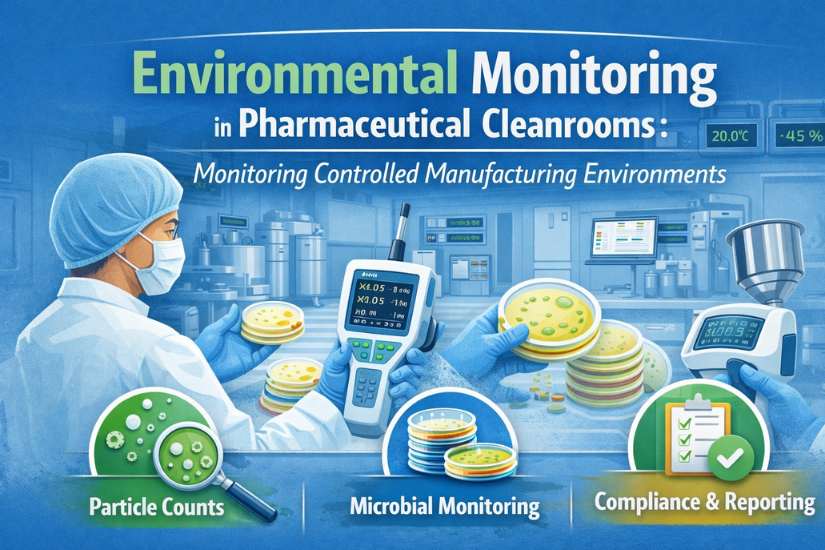
Pharmaceutical manufacturing often requires highly controlled environments to ensure that products are produced safely and without contamination. Cleanrooms and controlled manufacturing areas are designed to minimize the presence of airborne particles, microorganisms, and other contaminants that could compromise product quality.
To ensure that these environments remain within acceptable limits, pharmaceutical manufacturers implement Environmental Monitoring (EM) programs. Environmental monitoring provides ongoing verification that cleanrooms and controlled production areas maintain the conditions required for compliant pharmaceutical manufacturing.
Ultra Dynamic Quality Systems (UDQS) supports pharmaceutical and biopharmaceutical organizations across Africa in designing and implementing environmental monitoring programs aligned with WHO GMP guidelines, EU GMP Annex 1 requirements, and international cleanroom standards.
Why Environmental Monitoring Is Essential
Even the most carefully designed cleanrooms can be compromised if environmental conditions are not properly monitored and controlled.
Environmental monitoring helps manufacturers detect potential contamination risks before they affect product quality.
Key objectives of environmental monitoring include:
- Verifying cleanroom performance
- Detecting microbial contamination risks
- Monitoring airborne particulate levels
- Identifying environmental trends
- Supporting contamination control strategies
Effective monitoring programs allow manufacturers to respond quickly to environmental deviations and maintain product safety.
Types of Environmental Monitoring
Environmental monitoring programs typically include several types of testing designed to evaluate both microbial and particulate contamination.
Viable Monitoring (Microbial Monitoring)
Viable monitoring measures the presence of living microorganisms in the manufacturing environment.
Common microbial monitoring methods include:
- Air sampling to detect airborne microorganisms
- Surface sampling using contact plates or swabs
- Settle plates used to collect microorganisms that settle from the air
- Personnel monitoring to evaluate microbial contamination on operators
These tests help assess whether microbial contamination risks are being effectively controlled.
Non-Viable Particle Monitoring
Non-viable monitoring measures airborne particulate levels within cleanrooms.
Particles can originate from many sources, including:
- Personnel movement
- Equipment operation
- Air handling systems
- Raw materials
Particle monitoring is typically performed using electronic particle counters that measure airborne particles of specific sizes.
These measurements help verify compliance with cleanroom classification standards.
Cleanroom Classification and Environmental Limits
Cleanrooms are classified based on the maximum allowable concentration of airborne particles.
Common classification systems include ISO cleanroom standards, which define acceptable particle limits for different cleanroom grades.
Environmental monitoring programs ensure that these classification limits are consistently maintained.
In addition to regulatory limits, manufacturers typically establish:
- Alert limits – indicating potential environmental trends
- Action limits – requiring investigation and corrective action
These limits help organizations respond proactively to environmental changes.
Designing an Environmental Monitoring Program
An effective environmental monitoring program must be carefully designed to reflect the specific risks associated with the manufacturing process.
Key considerations include:
Sampling Locations
Monitoring points should be selected based on risk assessment and may include:
- Critical processing areas
- Equipment surfaces
- Personnel gowning areas
- Material transfer points
- Air handling system outlets
Sampling locations must represent areas where contamination risks are highest.
Monitoring Frequency
The frequency of environmental monitoring depends on factors such as:
- Product type (sterile or non-sterile)
- Cleanroom classification
- Production activity levels
- Regulatory expectations
Sterile manufacturing environments typically require more frequent monitoring than non-sterile production areas.
Data Trending and Analysis
Environmental monitoring data should not only be collected but also analyzed for trends.
Trend analysis helps identify patterns such as:
- Gradual increases in microbial counts
- Seasonal environmental changes
- Performance issues with HVAC systems
Identifying trends early allows manufacturers to take preventive action before contamination occurs.
Investigating Environmental Deviations
When monitoring results exceed established limits, organizations must conduct investigations to determine the root cause.
Possible causes may include:
- Personnel hygiene failures
- HVAC system malfunctions
- Inadequate cleaning procedures
- Equipment contamination
- Process disruptions
Corrective and preventive actions (CAPA) must then be implemented to prevent recurrence.
Regulatory Expectations for Environmental Monitoring
Environmental monitoring programs are closely reviewed during GMP inspections.
Regulators typically evaluate:
- Environmental monitoring procedures
- Sampling locations and frequencies
- Microbial identification programs
- Investigation of environmental deviations
- Trend analysis practices
Well-structured environmental monitoring programs demonstrate that manufacturers maintain effective control of their manufacturing environments.
The UDQS Approach to Environmental Monitoring
Ultra Dynamic Quality Systems (UDQS) provides technical expertise to help pharmaceutical organizations establish robust environmental monitoring programs.
Key services include:
- Environmental monitoring program design
- Cleanroom classification assessments
- Sampling plan development
- Data trending and analysis systems
- Contamination control strategy integration
- Investigation and CAPA support for environmental deviations
By combining regulatory knowledge with practical operational experience, UDQS helps manufacturers ensure that cleanroom environments remain compliant with international GMP expectations.
Supporting Contamination-Free Pharmaceutical Manufacturing
Maintaining controlled manufacturing environments is essential for producing safe and effective pharmaceutical products.
Environmental monitoring programs provide the data needed to verify that cleanrooms perform as intended and that contamination risks remain under control.
Organizations that implement structured monitoring systems strengthen both their regulatory compliance and their ability to protect patient safety.
Strengthen Your Environmental Monitoring Program
Ultra Dynamic Quality Systems (UDQS) supports pharmaceutical and biopharmaceutical manufacturers in designing and implementing environmental monitoring programs aligned with international regulatory standards.
Whether developing new cleanroom facilities, upgrading monitoring systems, or preparing for regulatory inspections, UDQS provides the expertise needed to ensure consistent environmental control and GMP compliance.