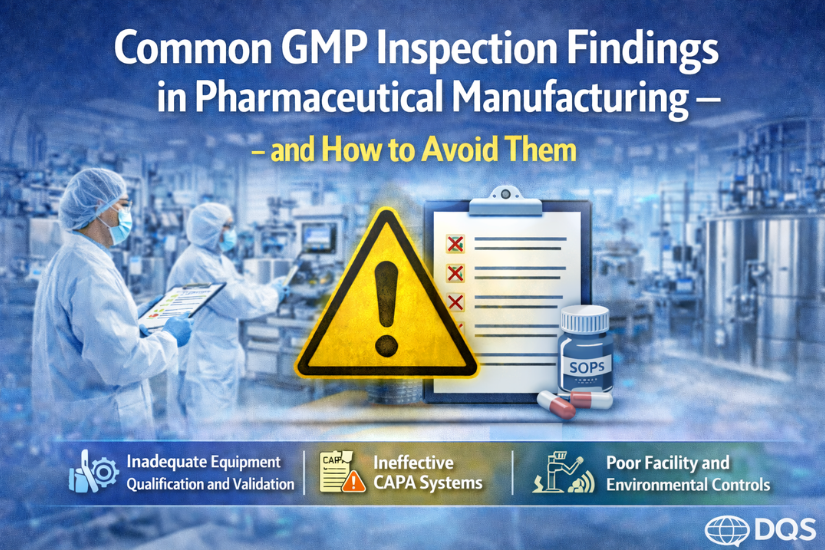
Regulatory inspections are a critical part of pharmaceutical manufacturing oversight. Health authorities conduct these inspections to ensure that medicines are produced consistently according to Good Manufacturing Practice (GMP) standards.
For pharmaceutical manufacturers, inspections can determine whether a facility maintains its license to operate, can export products internationally, or can supply medicines to global procurement programs.
Despite the existence of detailed GMP guidelines, many organizations repeatedly encounter similar observations during inspections. Understanding these common findings can help manufacturers strengthen their systems and avoid regulatory concerns.
Ultra Dynamic Quality Systems (UDQS) has supported pharmaceutical and biopharmaceutical manufacturers across Africa in preparing for regulatory inspections and addressing GMP gaps. The following overview highlights some of the most common inspection findings and practical strategies for avoiding them.
Inadequate Documentation Practices
Documentation forms the backbone of GMP compliance. Regulators expect that all manufacturing and quality activities are clearly documented and traceable.
Common documentation-related findings include:
- Incomplete batch manufacturing records
- Missing signatures or dates on records
- Uncontrolled document versions
- Poorly maintained logbooks
These issues can undermine confidence in the reliability of manufacturing operations.
How to Avoid This Issue
Manufacturers should establish strong document control systems that ensure:
- Only approved procedures are used in operations
- Records are completed at the time activities occur
- Documentation is regularly reviewed for accuracy and completeness
Regular training in documentation practices is also essential.
Weak Data Integrity Controls
Data integrity has become one of the most heavily scrutinized areas during GMP inspections.
Regulators expect all manufacturing and laboratory data to comply with ALCOA+ principles, meaning data must be attributable, legible, contemporaneous, original, accurate, complete, consistent, enduring, and available.
Common findings include:
- Shared login credentials for electronic systems
- Lack of audit trails in laboratory software
- Uncontrolled spreadsheet calculations
- Manual transcription errors
These weaknesses raise concerns about the reliability of quality data.
How to Avoid This Issue
Organizations should implement structured data governance systems, including:
- Controlled access to electronic systems
- Regular audit trail reviews
- Standardized documentation practices
- Staff training on data integrity principles
Building a culture that emphasizes data transparency is equally important.
Inadequate Equipment Qualification and Validation
Validation is essential for demonstrating that equipment and processes consistently perform as expected.
Common validation-related findings include:
- Missing qualification protocols
- Incomplete validation reports
- Lack of process validation data
- Poorly documented calibration activities
Without proper validation evidence, regulators cannot be confident that manufacturing processes are under control.
How to Avoid This Issue
Manufacturers should implement a structured validation program that includes:
- Validation Master Plans
- Equipment qualification (IQ, OQ, PQ)
- Process validation studies
- Routine calibration and maintenance programs
Validation activities should follow internationally recognized standards such as WHO GMP and EU GMP Annex 15.
Ineffective CAPA Systems
Corrective and Preventive Action (CAPA) systems are designed to address quality issues and prevent recurrence.
However, regulators frequently observe weaknesses such as:
- Superficial root cause analysis
- Repeated deviations without corrective action
- Lack of CAPA effectiveness checks
- Poor follow-up on quality investigations
These issues indicate that quality problems are not being systematically resolved.
How to Avoid This Issue
An effective CAPA system should include:
- Structured root cause analysis tools
- Risk-based prioritization of issues
- Clear implementation timelines
- Monitoring of corrective action effectiveness
This ensures that problems are resolved permanently rather than temporarily addressed.
Insufficient Personnel Training
Personnel competence is a key pillar of GMP compliance.
Common training-related observations include:
- Outdated training records
- Staff unfamiliar with operating procedures
- Inadequate GMP awareness among production staff
- Lack of training effectiveness evaluation
When personnel do not fully understand procedures, the risk of operational errors increases significantly.
How to Avoid This Issue
Organizations should implement comprehensive training programs that include:
- Initial GMP training for all staff
- Procedure-specific operational training
- Periodic refresher courses
- Competency assessments
Well-trained personnel contribute significantly to maintaining compliance.
Poor Facility and Environmental Controls
Facility design and environmental control systems are also frequently reviewed during inspections.
Common observations include:
- Poor segregation of manufacturing areas
- Inadequate pressure differentials between cleanrooms
- Insufficient environmental monitoring programs
- Poor facility maintenance
These issues can increase the risk of contamination.
How to Avoid This Issue
Manufacturers should ensure that facilities are designed and maintained according to GMP principles, including:
- Controlled personnel and material flows
- Proper cleanroom classifications
- Effective HVAC systems
- Routine environmental monitoring programs
Turning Inspection Findings into Improvement Opportunities
While inspection findings can be challenging, they also provide valuable insights into areas where systems need strengthening.
Organizations that treat regulatory observations as opportunities for improvement often develop stronger quality systems and more reliable manufacturing operations.
A proactive approach to inspection readiness ensures that facilities remain in a constant state of GMP compliance.
The UDQS Approach to Inspection Readiness
Ultra Dynamic Quality Systems (UDQS) assists pharmaceutical and biopharmaceutical manufacturers in preparing for regulatory inspections through structured and practical interventions.
Support services include:
- GMP gap assessments
- Mock regulatory inspections
- Validation program development
- Data integrity system strengthening
- CAPA system implementation
- Quality Management System improvement
By combining regulatory expertise with operational experience, UDQS helps organizations transform inspection preparation into a strategic quality improvement process.
Achieving Sustainable GMP Compliance
Regulatory inspections are an integral part of maintaining pharmaceutical quality and protecting public health.
Organizations that invest in strong quality systems, robust validation programs, and effective training frameworks are best positioned to succeed during inspections.
With the right preparation and technical support, pharmaceutical manufacturers can approach regulatory inspections with confidence and demonstrate their commitment to producing safe, effective, and high-quality medicines.