In modern pharmaceutical manufacturing, data integrity has become one of the most scrutinized aspects of regulatory compliance. Health authorities around the world increasingly emphasize that reliable data is essential to ensure the safety, quality, and efficacy of medicines.
Regulators such as the World Health Organization (WHO), European Medicines Agency (EMA), and PIC/S authorities expect pharmaceutical manufacturers to maintain data systems that are trustworthy, transparent, and fully traceable.
At the heart of this requirement lies the concept known as ALCOA+, a set of principles that define how data must be generated, recorded, and maintained throughout the product lifecycle.
For pharmaceutical manufacturers across Africa, building strong data integrity systems is not only necessary for regulatory approval but also critical for maintaining operational control and credibility.
Ultra Dynamic Quality Systems (UDQS) works with pharmaceutical and biopharmaceutical organizations to establish data governance frameworks aligned with international regulatory expectations.
Understanding Data Integrity in GMP
Data integrity refers to the accuracy, completeness, consistency, and reliability of data throughout its lifecycle.
In pharmaceutical manufacturing, data is generated at every stage of the process, including:
- Raw material testing
- Production operations
- Environmental monitoring
- Equipment calibration
- Quality control analysis
- Batch release decisions
If this data is unreliable or manipulated, regulators cannot trust that products are manufactured according to approved standards.
As a result, data integrity failures have become one of the most common reasons for regulatory warnings, import alerts, and product recalls worldwide.
The ALCOA Principles
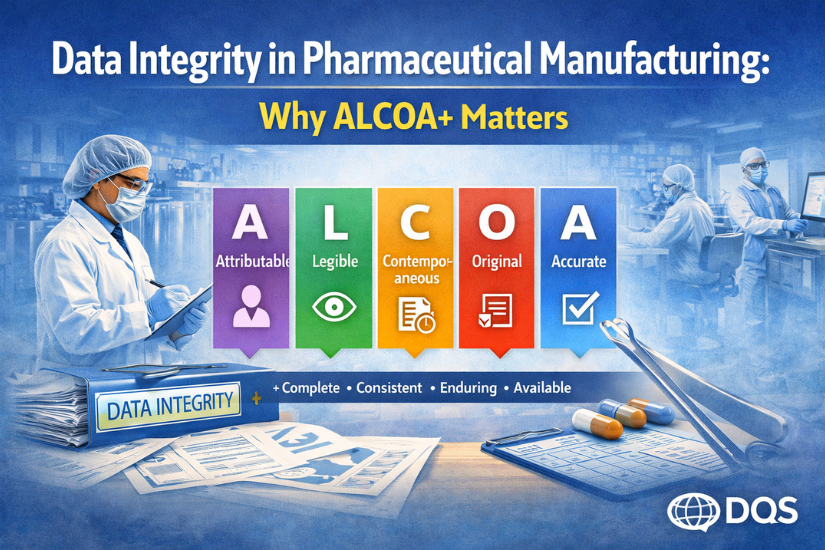
To ensure the reliability of pharmaceutical data, regulators apply the ALCOA principles. These principles define the core attributes that data must possess.
Attributable
Every data entry must clearly indicate who performed the action and when it was performed.
This ensures accountability and traceability for all activities recorded in manufacturing and quality systems.
Legible
All records must be clear, readable, and permanent.
Illegible handwriting, incomplete entries, or faded records can compromise the reliability of documentation and lead to regulatory concerns.
Contemporaneous
Data must be recorded at the time the activity occurs.
Backdating or delayed recording of information creates doubts about the authenticity of records.
Original
Original data must be preserved, whether in paper or electronic form.
Copies or transcriptions should always be traceable to the original source data.
Accurate
Data must reflect the true result of an observation or measurement, without alteration or manipulation.
Accuracy is essential for maintaining scientific validity in pharmaceutical operations.
The Expanded ALCOA+ Principles
Regulators have expanded the original ALCOA framework to include additional requirements, often referred to as ALCOA+.
These include:
Complete
All data related to an activity must be retained, including failed tests, deviations, and repeated analyses.
Selective reporting is not acceptable.
Consistent
Data must follow a logical sequence and demonstrate consistent documentation practices across operations.
For example, timestamps, batch numbers, and test results should align across all related records.
Enduring
Records must be maintained in durable formats that remain accessible throughout the required retention period.
This includes secure archiving systems and proper protection against data loss.
Available
Data must be readily accessible for review by regulators and quality personnel whenever required.
Delayed retrieval or missing records can raise serious regulatory concerns.
Common Data Integrity Risks
Despite the clarity of regulatory expectations, many organizations face challenges maintaining robust data integrity systems.
Common risks include:
- Incomplete documentation
- Shared login credentials
- Uncontrolled spreadsheet systems
- Lack of audit trails
- Poor training on documentation practices
- Manual transcription errors
These weaknesses can undermine otherwise well-designed quality systems.
Building a Strong Data Integrity Culture
Data integrity is not only a technical issue—it is also a cultural issue.
Organizations must ensure that all employees understand the importance of accurate documentation and ethical data practices.
Effective data integrity programs include:
- Clear data governance policies
- Controlled access to electronic systems
- Audit trail reviews
- Staff training on ALCOA+ principles
- Risk assessments of critical data systems
- Regular internal audits
These practices create a culture where data reliability becomes a shared organizational responsibility.
The UDQS Approach to Data Integrity
Ultra Dynamic Quality Systems (UDQS) supports pharmaceutical organizations in strengthening their data integrity frameworks through structured and practical interventions.
Key support areas include:
- Data integrity gap assessments
- ALCOA+ compliance training
- Electronic system risk assessments
- Audit trail review programs
- Documentation improvement strategies
- Integration of data integrity controls into Quality Management Systems
By combining regulatory expertise with operational experience, UDQS helps organizations ensure that their data systems meet international GMP expectations.
Data Integrity as the Foundation of Trust
Ultimately, pharmaceutical manufacturing is built on trust—trust that the medicines produced are safe, effective, and of consistent quality.
Reliable data forms the foundation of that trust.
Organizations that invest in strong data integrity systems not only satisfy regulators but also strengthen their operational discipline, improve decision-making, and enhance their credibility in global pharmaceutical markets.
Strengthen Your Data Integrity Systems
Ultra Dynamic Quality Systems (UDQS) provides specialized support to pharmaceutical and biopharmaceutical organizations seeking to strengthen their data governance and GMP compliance systems.
If your organization is preparing for regulatory inspections, upgrading laboratory systems, or implementing electronic records, UDQS can help ensure your data integrity framework meets international expectations.