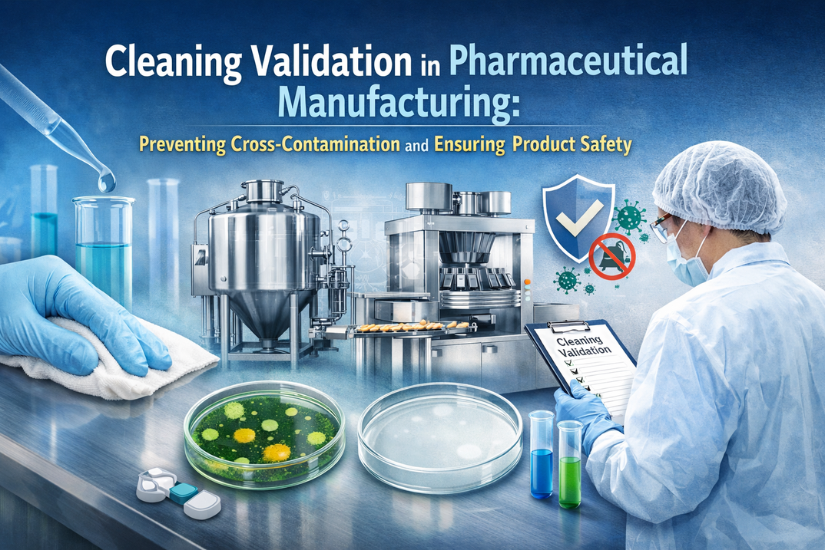
In pharmaceutical manufacturing, maintaining clean equipment and production environments is essential to ensure that medicines remain safe, effective, and free from contamination. One of the most important systems used to achieve this objective is cleaning validation.
Cleaning validation provides documented evidence that cleaning procedures consistently remove residues of active pharmaceutical ingredients (APIs), excipients, cleaning agents, and microbial contaminants to acceptable levels.
For pharmaceutical manufacturers across Africa seeking to comply with Good Manufacturing Practice (GMP) requirements, implementing a structured cleaning validation program is essential for preventing cross-contamination and protecting product quality.
Ultra Dynamic Quality Systems (UDQS) supports pharmaceutical and biopharmaceutical organizations in designing and implementing cleaning validation programs aligned with WHO GMP guidelines, EU GMP Annex 15, and international regulatory expectations.
Why Cleaning Validation Is Critical
Pharmaceutical manufacturing equipment is often used for the production of multiple products. Without proper cleaning controls, residues from previous batches may contaminate subsequent products.
This can lead to several risks, including:
- Cross-contamination between products
- Exposure to unintended active ingredients
- Product quality failures
- Regulatory non-compliance
- Potential risks to patient safety
Cleaning validation ensures that equipment cleaning procedures effectively remove contaminants before the next production cycle begins.
Key Elements of a Cleaning Validation Program
A comprehensive cleaning validation program includes several essential components that ensure cleaning procedures are scientifically justified and consistently effective.
Cleaning Procedure Development
The first step is the development of standardized cleaning procedures for each piece of equipment or production line.
These procedures typically define:
- Cleaning agents used
- Cleaning steps and sequence
- Equipment disassembly requirements
- Cleaning temperatures and contact times
- Rinse procedures
- Drying methods
Procedures must be clearly documented and followed consistently during operations.
Establishing Residue Limits
Cleaning validation requires defining acceptable residue limits that determine how clean equipment must be before reuse.
Residue limits are typically established based on factors such as:
- Toxicological properties of the product
- Therapeutic dose of the active ingredient
- Maximum daily dose of the next product manufactured
- Equipment surface area
Risk-based approaches are often used to calculate acceptable residue levels.
Worst-Case Product Selection
In facilities manufacturing multiple products, it is not always necessary to validate cleaning procedures for every product.
Instead, manufacturers identify worst-case products based on criteria such as:
- Highest potency
- Lowest solubility
- Highest toxicity
- Most difficult-to-clean formulation
Validating cleaning procedures against worst-case scenarios provides confidence that other products can also be adequately removed.
Sampling Methods
Cleaning validation requires analytical testing to confirm that residues have been successfully removed.
Two common sampling methods are used:
Swab Sampling
Swabs are used to collect residue samples from specific equipment surfaces.
This method is particularly useful for evaluating hard-to-clean areas.
Rinse Sampling
Rinse sampling analyzes the final rinse solution used during cleaning.
This method helps detect residues that may remain in areas that are difficult to access with swabs.
Both methods may be used together to provide comprehensive verification of cleaning effectiveness.
Analytical Testing
Collected samples must be analyzed using validated analytical methods capable of detecting residues at very low levels.
Common analytical techniques include:
- High Performance Liquid Chromatography (HPLC)
- Total Organic Carbon (TOC) analysis
- UV spectroscopy
These methods must demonstrate adequate sensitivity, accuracy, and precision.
Cleaning Validation Protocols and Documentation
Cleaning validation must be documented through structured protocols and reports.
A typical cleaning validation protocol includes:
- Equipment description
- Cleaning procedures
- Sampling locations
- Analytical methods
- Acceptance criteria
- Number of validation runs required
After validation studies are completed, results are documented in a cleaning validation report, which confirms whether cleaning procedures meet the predefined acceptance criteria.
Maintaining Cleaning Validation
Cleaning validation is not a one-time exercise. It must be maintained throughout the lifecycle of the equipment.
Revalidation may be required when:
- New products are introduced
- Equipment modifications occur
- Cleaning procedures are changed
- Repeated cleaning failures occur
Periodic review of cleaning validation programs helps ensure continued compliance.
Common Cleaning Validation Challenges
Many pharmaceutical manufacturers encounter difficulties when implementing cleaning validation programs.
Common challenges include:
- Inadequate sampling techniques
- Poorly defined residue limits
- Insufficient analytical sensitivity
- Lack of risk-based product selection
- Incomplete validation documentation
Addressing these issues early in the validation process helps prevent regulatory observations.
The UDQS Approach to Cleaning Validation
Ultra Dynamic Quality Systems (UDQS) supports pharmaceutical manufacturers in establishing scientifically sound and regulatory-compliant cleaning validation programs.
Key services include:
- Cleaning validation strategy development
- Residue limit calculations using risk-based approaches
- Cleaning validation protocol development
- Sampling strategy design
- Analytical method support
- Cleaning validation report preparation
By integrating engineering, analytical, and regulatory expertise, UDQS helps organizations implement cleaning validation systems that ensure product safety and regulatory compliance.
Strengthening Contamination Control in Pharmaceutical Manufacturing
Cleaning validation is a critical component of pharmaceutical contamination control strategies. When implemented correctly, it ensures that manufacturing equipment is consistently free from harmful residues and ready for safe production.
Organizations that establish robust cleaning validation systems strengthen both their regulatory compliance and their commitment to patient safety.
Expert Support for Cleaning Validation
Ultra Dynamic Quality Systems (UDQS) provides specialized technical support for pharmaceutical and biopharmaceutical organizations seeking to implement or strengthen their cleaning validation programs.
Whether supporting new manufacturing facilities, expanding production lines, or preparing for regulatory inspections, UDQS helps ensure that cleaning validation systems meet international GMP standards and industry best practices.