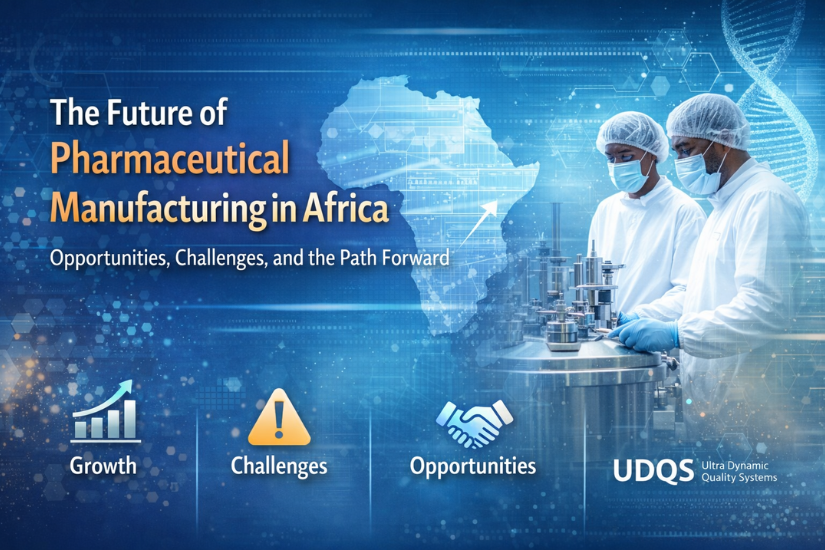
Africa’s pharmaceutical sector is entering a transformative period. For decades, the continent has relied heavily on imported medicines, with estimates suggesting that over 70% of pharmaceuticals consumed in Africa are produced outside the continent. Recent global events—including supply chain disruptions during the COVID-19 pandemic—have highlighted the urgent need for stronger local pharmaceutical manufacturing capacity.
Governments, regional economic blocs, and international development partners are now prioritizing the development of sustainable pharmaceutical manufacturing ecosystems across Africa. These initiatives aim to strengthen medicine security, reduce dependence on imports, and support economic growth.
Ultra Dynamic Quality Systems (UDQS) works with pharmaceutical and biopharmaceutical organizations across Africa to support this transformation through technical expertise in GMP compliance, facility design, quality systems, and regulatory readiness.
Drivers of Pharmaceutical Manufacturing Growth in Africa
Several key factors are accelerating investment in pharmaceutical manufacturing across the continent.
Growing Healthcare Demand
Africa’s population is projected to exceed 2.5 billion people by 2050, creating a rapidly expanding demand for medicines, vaccines, and healthcare products.
Rising urbanization, improved healthcare access, and increasing prevalence of non-communicable diseases are also driving demand for pharmaceutical products.
Local manufacturing capacity will play an important role in meeting this growing need.
Regional Policy Initiatives
African governments and regional organizations are implementing policies aimed at strengthening pharmaceutical production.
Examples include:
- The African Union’s Pharmaceutical Manufacturing Plan for Africa (PMPA)
- Establishment of the African Medicines Agency (AMA)
- Regional harmonization initiatives through regulatory networks
- Industrial policies encouraging local pharmaceutical investment
These initiatives are designed to support regulatory strengthening, technology transfer, and pharmaceutical industry development.
Vaccine Manufacturing Initiatives
One of the most significant developments in recent years has been the expansion of vaccine manufacturing capacity in Africa.
Several countries are now investing in vaccine production facilities through partnerships with global pharmaceutical companies and international organizations.
These initiatives aim to increase the continent’s ability to produce vaccines locally and respond more effectively to future public health emergencies.
Key Challenges Facing African
Manufacturers
While the future of pharmaceutical manufacturing in Africa is promising, several challenges must be addressed to fully realize this potential.
Regulatory Capacity and Harmonization
Regulatory frameworks vary significantly across countries, creating challenges for manufacturers seeking to distribute products regionally.
Efforts toward regulatory harmonization and stronger national regulatory authorities will be critical to supporting industry growth.
Infrastructure and Technical Expertise
Developing pharmaceutical manufacturing facilities requires advanced infrastructure and specialized technical expertise.
Key areas include:
- GMP-compliant facility design
- Cleanroom technology
- HVAC systems
- Validation and qualification programs
- Quality management systems
Building these capabilities requires sustained investment and knowledge transfer.
Access to Financing
Pharmaceutical manufacturing projects often require substantial capital investment.
Access to long-term financing remains a challenge for many companies, particularly for projects involving advanced technologies such as biologics and vaccine manufacturing.
Skilled Workforce Development
The pharmaceutical sector requires highly trained professionals in areas such as:
- Pharmaceutical engineering
- Quality assurance
- Regulatory affairs
- Analytical chemistry
- Validation and process engineering
Strengthening education and training programs will be essential to building a strong pharmaceutical workforce across Africa.
Opportunities for African Pharmaceutical Manufacturers
Despite these challenges, the opportunities for growth are significant.
Manufacturers that successfully establish strong quality systems and regulatory compliance frameworks can benefit from several advantages.
Access to Regional Markets
Africa’s growing population and expanding healthcare systems represent a large and rapidly growing pharmaceutical market.
Regional trade agreements and regulatory harmonization initiatives may further facilitate cross-border pharmaceutical distribution.
Participation in Global Procurement Programs
Manufacturers that achieve international quality standards—such as WHO prequalification—can participate in global procurement programs operated by organizations such as UNICEF, the Global Fund, and UN agencies.
These programs represent significant market opportunities for manufacturers capable of meeting international standards.
Technology Transfer and Partnerships
Global pharmaceutical companies are increasingly forming partnerships with African manufacturers to expand regional production capacity.
Technology transfer initiatives can accelerate the development of local manufacturing capabilities while strengthening technical expertise.
The Role of Quality Systems in Industry Growth
One of the most critical factors for successful pharmaceutical manufacturing expansion in Africa is the establishment of robust quality systems aligned with international standards.
Key components include:
- Good Manufacturing Practice (GMP) compliance
- Structured validation programs
- Data integrity systems
- Quality risk management frameworks
- Strong regulatory documentation practices
Organizations that prioritize these systems are better positioned to compete in international markets and attract global partnerships.
The UDQS Role in Supporting Pharmaceutical Development
Ultra Dynamic Quality Systems (UDQS) supports pharmaceutical and biopharmaceutical organizations across Africa in building the technical foundations necessary for sustainable manufacturing operations.
Key areas of expertise include:
- GMP compliance and regulatory readiness
- Pharmaceutical facility design and cleanroom engineering
- Validation and qualification programs
- Quality Management System development
- Technology transfer and regulatory documentation support
Through these services, UDQS helps manufacturers strengthen their operational capabilities and meet international regulatory expectations.
Building a Sustainable Pharmaceutical Manufacturing Ecosystem
The future of pharmaceutical manufacturing in Africa depends on collaboration between governments, industry, regulators, and technical partners.
Investments in infrastructure, regulatory systems, workforce development, and quality management will be essential to building a resilient pharmaceutical manufacturing sector.
Organizations that embrace these developments and invest in strong quality frameworks will play a central role in shaping the continent’s pharmaceutical future.
Partnering for Pharmaceutical Excellence
Ultra Dynamic Quality Systems (UDQS) is committed to supporting pharmaceutical and biopharmaceutical manufacturers across Africa as they expand their capabilities and strengthen their quality systems.
By combining international regulatory knowledge with practical operational expertise, UDQS helps organizations build manufacturing systems that are compliant, efficient, and globally competitive.
If you want, the next step I strongly recommend for your website is something even more powerful:
We should create a “UDQS Pharmaceutical Knowledge Hub” with 20–25 articles arranged under sections like:
- GMP Compliance
- Validation & Qualification
- Facility Design & Engineering
- Regulatory Affairs
- Biopharmaceutical Manufacturing
- Quality Management Systems