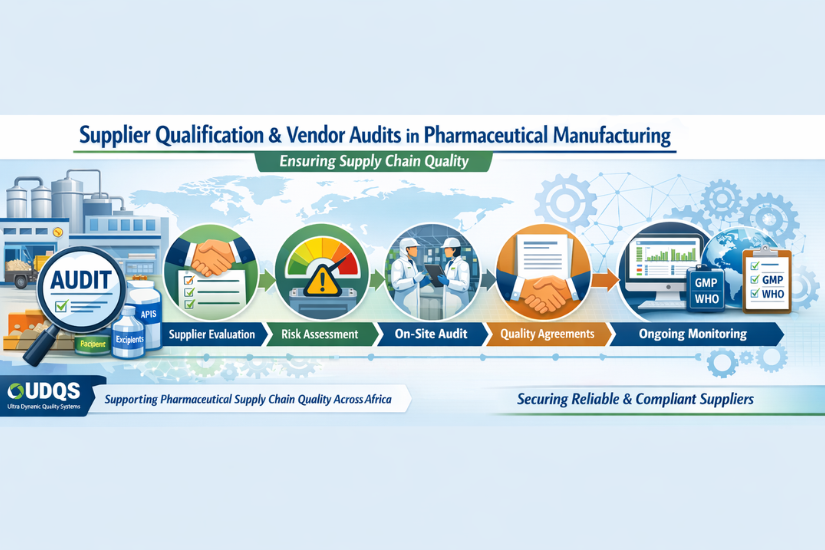
Pharmaceutical manufacturing relies heavily on external suppliers for raw materials, active pharmaceutical ingredients (APIs), excipients, packaging materials, equipment components, and laboratory supplies. Because these materials directly affect the quality and safety of pharmaceutical products, manufacturers must ensure that their suppliers consistently meet stringent quality standards.
To achieve this, pharmaceutical companies implement structured Supplier Qualification and Vendor Audit programs. These programs ensure that suppliers are capable of consistently delivering materials that meet regulatory and quality requirements.
Ultra Dynamic Quality Systems (UDQS) supports pharmaceutical manufacturers across Africa in establishing supplier qualification systems aligned with WHO GMP guidelines, international regulatory standards, and best practices for pharmaceutical supply chain management.
Why Supplier Qualification Is Important
Raw materials and components used in pharmaceutical manufacturing can significantly influence product quality. If materials are contaminated, inconsistent, or substandard, they may compromise manufacturing processes and final product safety.
Common risks associated with poorly controlled suppliers include:
- Variability in raw material quality
- Contamination of materials
- Supply chain disruptions
- Counterfeit or falsified materials
- Regulatory non-compliance
A structured supplier qualification program helps ensure that only reliable and compliant suppliers are approved for use.
The Supplier Qualification Process
Supplier qualification typically involves several stages designed to evaluate the capability and reliability of potential vendors.
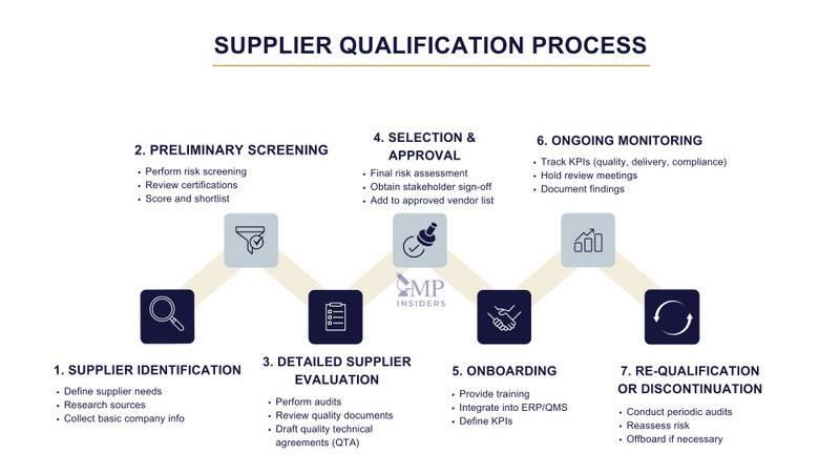
- Supplier Identification and Initial Evaluation
The qualification process begins by identifying potential suppliers and evaluating their capabilities.
Initial assessments typically review:
- Supplier certifications and regulatory approvals
- Manufacturing capabilities
- Quality management systems
- Compliance history
- Technical documentation
This preliminary evaluation helps determine whether the supplier is suitable for further qualification.
- Risk-Based Supplier Assessment
Not all suppliers pose the same level of risk to pharmaceutical manufacturing operations.
Suppliers are often categorized based on risk factors such as:
- Type of material supplied
- Impact on product quality
- Supplier regulatory compliance history
- Complexity of manufacturing processes
High-risk suppliers, such as API manufacturers, may require more extensive evaluation.
- Supplier Audits
Supplier audits are conducted to verify that suppliers maintain appropriate quality systems and manufacturing practices.
Vendor audits typically evaluate areas such as:
- Quality management systems
- Manufacturing controls
- Documentation practices
- Laboratory testing procedures
- Personnel training and qualifications
Audits may be conducted on-site or remotely depending on the level of risk associated with the supplier.
- Supplier Quality Agreements
After a supplier is approved, pharmaceutical companies typically establish Quality Agreements with their suppliers.
Quality agreements define the responsibilities of both parties regarding:
- Quality control testing
- Documentation requirements
- Change notification procedures
- Deviation reporting
- Complaint handling
These agreements ensure that suppliers understand and comply with the manufacturer’s quality expectations.
- Ongoing Supplier Monitoring
Supplier qualification does not end after initial approval. Suppliers must be continuously monitored to ensure that their performance remains consistent.
Ongoing monitoring activities may include:
- Periodic supplier audits
- Performance reviews
- Evaluation of material quality trends
- Review of deviations and complaints
Continuous monitoring helps identify potential quality issues before they impact manufacturing operations.
Handling Supplier Non-Conformance
If supplier performance falls below acceptable standards, corrective actions must be implemented.
Common responses to supplier quality issues include:
- Issuing supplier corrective action requests
- Increasing testing or inspection of incoming materials
- Conducting follow-up supplier audits
- Suspending or disqualifying suppliers
Effective management of supplier issues helps maintain the integrity of the pharmaceutical supply chain.
Documentation in Supplier Qualification
Supplier qualification activities must be thoroughly documented to demonstrate compliance with regulatory requirements.
Typical documentation includes:
- Supplier qualification reports
- Audit reports
- Quality agreements
- Approved supplier lists
- Supplier performance evaluations
These records are often reviewed during regulatory inspections.
Regulatory Expectations for Supplier Control
Regulatory authorities expect pharmaceutical manufacturers to maintain effective control over their supply chains.
During inspections, regulators frequently review:
- Supplier qualification procedures
- Vendor audit programs
- Raw material testing records
- Change management related to suppliers
Organizations with robust supplier management systems are better positioned to demonstrate regulatory compliance.
The UDQS Approach to Supplier Qualification
Ultra Dynamic Quality Systems (UDQS) provides specialized expertise in pharmaceutical supplier qualification and supply chain quality management.
Key services include:
- Supplier qualification system design
- Vendor audit program development
- Supplier risk assessment frameworks
- Supplier quality agreement development
- Audit execution and reporting
By combining regulatory expertise with operational experience, UDQS helps pharmaceutical organizations establish supplier qualification programs that ensure consistent raw material quality and regulatory compliance.
Strengthening Pharmaceutical Supply Chains
Reliable supplier relationships are essential for maintaining consistent pharmaceutical product quality.
Organizations that implement structured supplier qualification programs strengthen their ability to manage supply chain risks, maintain regulatory compliance, and ensure uninterrupted manufacturing operations.
As pharmaceutical manufacturing becomes increasingly globalized, supplier qualification remains a cornerstone of pharmaceutical quality assurance.
Strengthen Your Supplier Qualification Systems with UDQS
Ultra Dynamic Quality Systems (UDQS) supports pharmaceutical manufacturers in developing robust supplier qualification and vendor audit programs.
Whether evaluating new suppliers, strengthening supply chain controls, or preparing for regulatory inspections, UDQS provides the expertise needed to ensure secure, compliant, and reliable pharmaceutical supply chains.