

Modern pharmaceutical manufacturing relies heavily on computerized systems to manage production processes, laboratory testing, quality documentation, and regulatory records. From laboratory information systems to enterprise resource planning platforms, digital technologies now support almost every aspect of pharmaceutical operations.
Because these systems directly impact product quality and regulatory compliance, pharmaceutical companies must ensure that computerized systems operate reliably and maintain the integrity of critical data. This requirement is addressed through Computer System Validation (CSV).
Computer System Validation provides documented evidence that computerized systems perform their intended functions accurately, consistently, and in compliance with Good Manufacturing Practice (GMP) requirements.
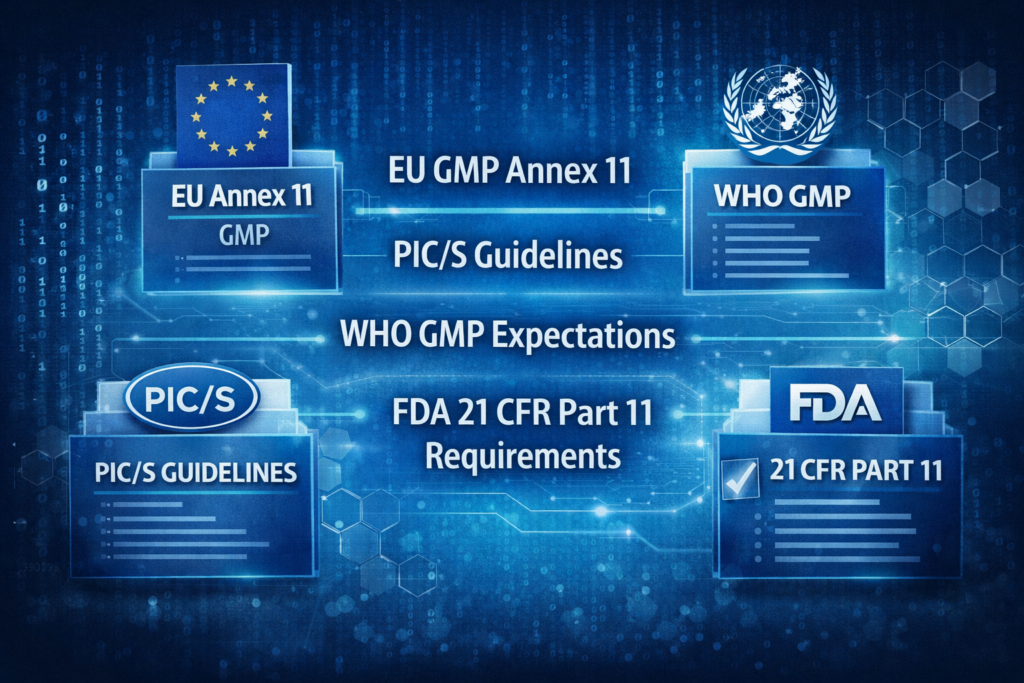
Ultra Dynamic Quality Systems (UDQS) supports pharmaceutical and biopharmaceutical organizations in designing and implementing CSV programs aligned with international regulatory frameworks, including EU GMP Annex 11, PIC/S guidelines, WHO GMP expectations, and FDA 21 CFR Part 11 requirements.
Why Computer System Validation Is Essential
Computerized systems play a central role in ensuring the quality, safety, and traceability of pharmaceutical products. These systems often manage critical activities such as:
- Batch manufacturing records
- Laboratory data and analytical results
- Equipment monitoring and control
- Inventory management
- Quality management documentation
- Regulatory reporting
If these systems malfunction or allow unauthorized data manipulation, the reliability of pharmaceutical operations can be compromised.
Computer System Validation ensures that computerized systems are fit for their intended purpose and maintain reliable, secure, and traceable data.
Regulatory Expectations for Computerized Systems
Global regulatory authorities require pharmaceutical companies to validate computerized systems used in GMP environments.
Key regulatory frameworks governing computerized systems include:
- EU GMP Annex 11 – Computerised Systems
- FDA 21 CFR Part 11 – Electronic Records and Electronic Signatures
- WHO GMP guidance on computerized systems
- PIC/S guidance on data integrity
These regulations require manufacturers to demonstrate that computerized systems are properly designed, tested, secured, and maintained throughout their lifecycle.
The Computer System Validation Lifecycle
Computer System Validation follows a structured lifecycle approach similar to equipment qualification.
The lifecycle typically includes several key stages.
User Requirement Specification (URS)
The validation process begins with defining system requirements.
The URS describes what the system must achieve, including:
- Functional capabilities
- Data integrity controls
- Security requirements
- Audit trail functionality
- Regulatory compliance expectations
A clear URS provides the foundation for system design and validation testing.
System Design and Configuration
After defining requirements, the system is designed or configured to meet those requirements.
This phase includes:
- Software configuration
- System architecture design
- Security setup
- Integration with other systems
Design documentation ensures that system functionality aligns with user requirements.
Installation Qualification (IQ)
Installation Qualification verifies that the computerized system has been installed correctly in the intended operating environment.
Typical IQ activities include:
- Hardware verification
- Software installation checks
- System configuration verification
- Network connectivity testing
IQ confirms that system components are installed according to approved specifications.
Operational Qualification (OQ)
Operational Qualification verifies that the system functions correctly under defined operating conditions.
Testing performed during OQ may include:
- System functionality testing
- Security and access control verification
- Audit trail functionality testing
- Error handling verification
- Data processing accuracy testing
OQ ensures that the system performs according to defined requirements.
Performance Qualification (PQ)
Performance Qualification confirms that the system performs reliably under routine operating conditions.
This stage typically includes:
- Real-world workflow testing
- User acceptance testing
- Verification of system performance during actual operations
PQ provides final assurance that the system supports routine pharmaceutical activities effectively.
Spreadsheet Validation in GMP Environments
Many pharmaceutical organizations rely on spreadsheets for critical activities such as:
- Analytical calculations
- Process monitoring
- Stability data analysis
- Laboratory data processing
However, uncontrolled spreadsheets can pose significant data integrity risks.
Spreadsheet validation ensures that calculations are accurate, formulas are protected, and changes are traceable.
Key controls include:
- Locked formulas
- Version control
- Change tracking
- Access restrictions
- Independent verification of calculations
Properly validated spreadsheets help maintain compliance with regulatory expectations.
Data Integrity and Audit Trails
One of the most critical aspects of CSV is ensuring that computerized systems maintain strong data integrity controls.
Systems must provide secure audit trails that record:
- User activities
- Data modifications
- System events
- Access attempts
Audit trails allow organizations and regulators to verify that data has not been altered improperly.
Maintaining Validated Systems
Computer System Validation does not end after initial implementation.
Validated systems must be maintained through:
- Change control procedures
- Periodic system reviews
- Software update assessments
- Security monitoring
- Backup and recovery procedures
These activities ensure that computerized systems remain compliant throughout their operational lifecycle.
Common CSV Challenges
Many pharmaceutical organizations encounter challenges when implementing computer system validation programs.
Common issues include:
- Incomplete validation documentation
- Poorly defined user requirements
- Lack of risk-based validation approaches
- Inadequate control of spreadsheets
- Insufficient audit trail monitoring
Addressing these issues early helps organizations maintain regulatory compliance.
The UDQS Approach to Computer System Validation
Ultra Dynamic Quality Systems (UDQS) provides specialized expertise in computer system validation for pharmaceutical and biopharmaceutical organizations.
Key services include:
- CSV strategy development
- User Requirement Specification development
- Risk assessments aligned with ICH Q9
- Spreadsheet validation programs
- Validation protocol development (IQ, OQ, PQ)
- Data integrity system strengthening
- Compliance with Annex 11 and 21 CFR Part 11
By integrating regulatory expertise with practical system implementation knowledge, UDQS helps organizations establish robust, compliant computerized systems.
Digital Systems and the Future of Pharmaceutical Manufacturing
As pharmaceutical manufacturing continues to evolve toward digital and automated systems, the importance of validated computerized systems will continue to grow.
Organizations that establish strong CSV frameworks are better positioned to maintain reliable data, support regulatory inspections, and ensure consistent product quality.
By implementing structured validation programs and robust data governance systems, pharmaceutical manufacturers can ensure that digital technologies strengthen—not compromise—the integrity of their operations.
Strengthen Your Computer System Validation Program
Ultra Dynamic Quality Systems (UDQS) supports pharmaceutical manufacturers across Africa in designing and implementing compliant computer system validation programs.
Whether implementing new digital systems, upgrading laboratory software, or strengthening data integrity controls, UDQS helps ensure that computerized systems meet international regulatory expectations.


