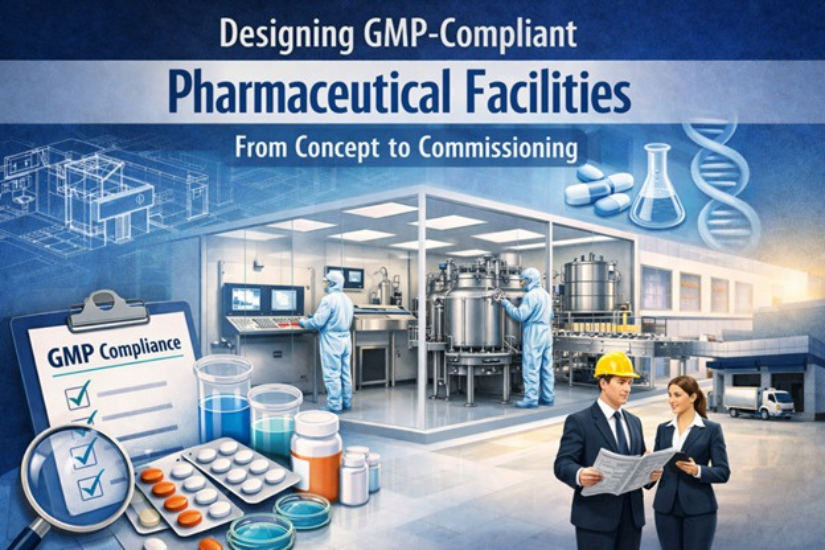
In pharmaceutical manufacturing, the design of a facility is one of the most critical determinants of regulatory compliance, operational efficiency, and product quality. Unlike many industrial facilities, pharmaceutical plants must be built around strict principles of contamination control, controlled environments, and validated processes.
For manufacturers across Africa expanding local pharmaceutical production, designing a GMP-compliant facility from the beginning is essential to avoid costly redesigns and regulatory delays later.
Ultra Dynamic Quality Systems (UDQS) works with pharmaceutical and biopharmaceutical manufacturers across the continent to design facilities aligned with international regulatory frameworks, including WHO GMP guidelines, EU GMP standards, and PIC/S requirements.
Why Facility Design Matters in GMP Compliance
Pharmaceutical manufacturing environments must be carefully controlled to prevent contamination, cross-contamination, and mix-ups.
A poorly designed facility can lead to serious GMP risks, including:
- Cross contamination between products
- Microbial contamination in sterile manufacturing
- Material mix-ups
- Inefficient production workflows
- Regulatory observations during inspections
Regulators increasingly emphasize that quality must be built into the facility design, not added later through procedural controls.
Key Principles of GMP Facility Design
A GMP-compliant facility is built around several core design principles.
Controlled Flow of Personnel and Materials
One of the most important design concepts is the separation of personnel flow and material flow.
Facility layouts must ensure:
- Logical movement of raw materials through production stages
- Controlled personnel access to manufacturing areas
- Prevention of cross-traffic between clean and contaminated zones
Proper flow design significantly reduces contamination risks.
Zoning and Cleanroom Classification
Manufacturing areas must be divided into zones with different cleanliness levels depending on the type of product being manufactured.
Typical controlled environments include:
- Controlled non-classified areas
- Cleanrooms for non-sterile production
- High-grade environments for sterile manufacturing
Environmental classifications are typically aligned with regulatory expectations such as ISO cleanroom standards and GMP guidelines for sterile products.
HVAC Systems and Environmental Control
Heating, ventilation, and air conditioning (HVAC) systems are fundamental to maintaining clean manufacturing environments.
A GMP-compliant HVAC system typically controls:
- Air filtration
- Temperature
- Relative humidity
- Pressure differentials between rooms
- Air change rates
Properly designed HVAC systems help maintain cleanroom classifications and prevent contamination between areas.
Contamination Control Strategy
Modern regulatory expectations emphasize the need for a comprehensive contamination control strategy.
This includes controls for:
- Microbial contamination
- Particulate contamination
- Cross contamination between products
- Operator-induced contamination
- Environmental monitoring
Facility design must support these controls through layout, materials of construction, and environmental systems.
Materials of Construction
Surfaces used in pharmaceutical manufacturing areas must be easy to clean, resistant to chemicals, and non-shedding.
Typical materials used include:
- Epoxy /Polyuretene flooring
- Stainless steel equipment surfaces
- Smooth wall panels
- Sealed ceilings
- Cleanable lighting fixtures
These materials help maintain hygienic conditions and simplify cleaning validation.
Integrating Facility Design with GMP Systems
A successful pharmaceutical facility is not only an engineering project—it must also integrate with the broader pharmaceutical quality system.
Facility design must consider:
- Process validation requirements
- Equipment qualification
- Cleaning validation
- Environmental monitoring programs
- Data integrity systems
Integrating these elements early in the design phase significantly improves compliance outcomes.
The Facility Lifecycle: From Concept to Commissioning
Developing a GMP facility typically follows several key phases.
Conceptual Design
During this phase, the overall manufacturing concept is defined, including:
- Product types
- Production capacity
- Process flow
- Regulatory requirements
Detailed Engineering Design
Engineering teams develop detailed layouts, utility systems, HVAC designs, and cleanroom classifications.
Construction and Installation
The facility is constructed and equipment installed according to approved design specifications.
Qualification and Commissioning
Before production begins, the facility undergoes extensive qualification activities, including:
- Design Qualification (DQ)
- Installation Qualification (IQ)
- Operational Qualification (OQ)
- Performance Qualification (PQ)
These activities demonstrate that the facility performs according to GMP requirements.
Common Facility Design Challenges
Many pharmaceutical facilities encounter compliance issues due to design weaknesses.
Common problems include:
- Inadequate material and personnel flow
- Incorrect pressure differentials
- Insufficient cleanroom classifications
- Poor segregation of manufacturing areas
- Lack of validation planning during design
Addressing these issues after construction can be extremely expensive and time-consuming.
The UDQS Approach to GMP Facility Design
Ultra Dynamic Quality Systems (UDQS) provides expert support across the entire pharmaceutical facility development lifecycle.
Key services include:
- GMP facility concept development
- Cleanroom layout design
- HVAC and contamination control strategy
- Process flow optimization
- Risk assessments aligned with ICH Q9
- Commissioning and qualification support
By integrating engineering expertise with regulatory knowledge, UDQS helps organizations design facilities that are both operationally efficient and fully compliant with international GMP standards.
Building the Future of Pharmaceutical Manufacturing in Africa
As Africa expands its pharmaceutical manufacturing capacity, the need for well-designed GMP facilities continues to grow.
Facilities designed according to international standards not only meet regulatory requirements but also enable manufacturers to participate in global pharmaceutical supply chains.
With the right design strategy and technical expertise, pharmaceutical organizations can build facilities that support long-term regulatory compliance, operational efficiency, and product quality.
Start Your GMP Facility Project with Confidence
Ultra Dynamic Quality Systems (UDQS) supports pharmaceutical and biopharmaceutical organizations across Africa in designing, developing, and qualifying GMP-compliant manufacturing facilities.
Whether your organization is planning a new manufacturing plant, upgrading an existing facility, or expanding production capacity, UDQS can help ensure that your project meets international regulatory expectations from the very beginning.