

Abstract
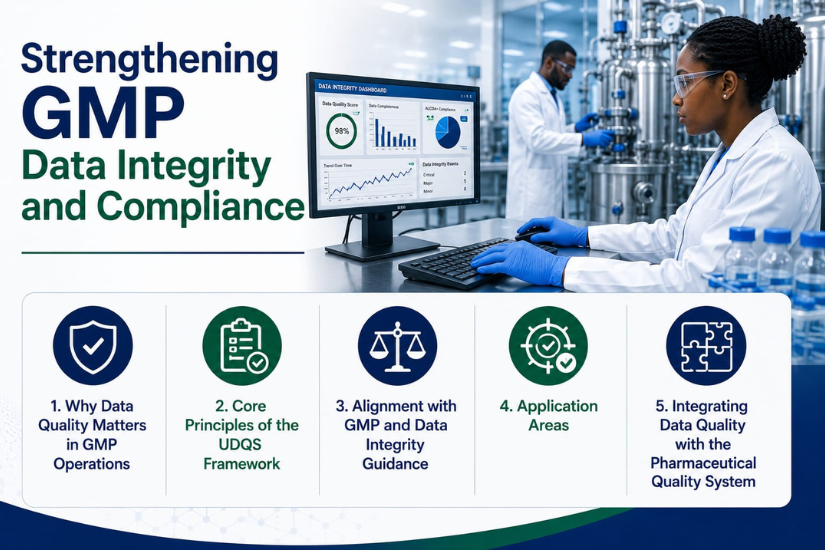
Data integrity sits at the centre of every modern pharmaceutical and regulated manufacturing operation. As digital systems, automated equipment, and electronic records continue to replace traditional paper-based workflows, regulators and quality leaders alike are placing greater emphasis on the reliability of the data that underpins GMP decisions. The Universal Data Quality Score (UDQS) framework offers organisations a structured, risk-based, and compliance-oriented approach to assessing and strengthening data quality across the full data lifecycle. This article outlines the rationale for the framework, its core principles, the regulatory expectations it aligns with, and the practical ways in which it can be applied across pharmaceutical manufacturing, quality control laboratories, computerised systems, and distribution operations.
1. Introduction
In pharmaceutical, biopharmaceutical, healthcare, and regulated manufacturing environments, data integrity and data governance have evolved from supporting functions into central pillars of Good Manufacturing Practice (GMP) compliance and quality assurance. Modern operations now depend on a continuous stream of data generated by manufacturing systems, analytical laboratories, environmental monitoring platforms, computerised utilities, and quality management systems.
As organisations accelerate the adoption of digital technologies, automation, and integrated electronic records, the ability to maintain accurate, complete, and traceable data across the entire lifecycle has become a defining measure of operational maturity. The Universal Data Quality Score (UDQS) framework has been developed to help organisations evaluate, benchmark, and strengthen their data quality practices through a structured, risk-based, and compliance-oriented approach aligned with internationally recognised GMP and quality system expectations.
2. Why Data Quality Matters in GMP Operations
Pharmaceutical quality systems depend on accurate, trustworthy data to support both operational and regulatory decisions. When data is poorly controlled, the consequences ripple across the entire quality system and can include:
- Incomplete or unreliable manufacturing records.
- Inaccurate laboratory results.
- Weak traceability across batches and processes.
- Adverse data integrity observations during regulatory inspections.
- Ineffective investigations and corrective and preventive actions (CAPA).
- Heightened overall compliance risk.
Regulatory authorities increasingly expect organisations to demonstrate that the data supporting GMP activities is reliable, attributable, protected, and appropriately governed at every stage of its lifecycle. For this reason, data integrity has become a focal area during regulatory inspections, internal audits, and supplier quality assessments.
3. Core Principles of the UDQS Framework
The UDQS framework is built on widely recognised principles of data governance, quality assurance, and GMP data integrity. Each principle addresses a specific dimension of data quality and, together, they form a coherent foundation for evaluating organisational maturity.
3.1 Data Accuracy
Data should faithfully reflect the activities performed, observations made, measurements taken, and operational outcomes recorded. Accurate data underpins reliable decision-making and supports product quality assurance throughout the manufacturing lifecycle.
3.2 Data Completeness
Records should capture all required information across the process lifecycle. Missing, undocumented, or partial entries undermine traceability and can compromise both compliance and the ability to reconstruct events during investigations.
3.3 Data Consistency
Information recorded across systems, logs, reports, and electronic platforms should remain aligned. Consistent data enables effective investigations, supports operational reliability, and reduces the risk of contradictory records being identified during audits.
3.4 Traceability and Auditability
Organisations should maintain clear traceability of how data is generated, modified, reviewed, and approved. Effective traceability requires deliberate control over:
- Audit trails.
- Electronic records.
- User access controls.
- Record retention systems.
3.5 Timeliness of Recording
Critical GMP activities should be documented at the time they are performed, in accordance with approved procedures and good documentation practices. Contemporaneous recording is one of the most frequently cited expectations during inspections.
3.6 Data Protection and Integrity
Data should be safeguarded against unauthorised alteration, deletion, or loss through a combination of procedural and technical controls. This includes role-based access, secure backups, validated audit trails, and clear data ownership.
4. Alignment with GMP and Data Integrity Guidance
The UDQS framework is intended to align with principles described in internationally recognised guidance and standards, including:
- WHO Good Manufacturing Practice guidance.
- EU GMP Annex 11 — Computerised Systems.
- FDA 21 CFR Part 11 — Electronic Records and Electronic Signatures.
- PIC/S guidance on data integrity (PI 041).
- ISO 9001 quality management principles.
- ICH Q9 quality risk management principles.
The framework also incorporates the ALCOA+ data integrity concepts that underpin most modern regulatory expectations.
4.1 ALCOA+ Principles
Under the ALCOA principles, data should be:
- Attributable — clearly linked to the person or system that generated it.
- Legible — readable and permanent throughout its retention period.
- Contemporaneous — recorded at the time of the activity.
- Original — preserved in its first-captured form, or as a verified true copy.
- Accurate — free from error and reflective of the actual event.
Under the ALCOA+ extension, data should additionally be:
- Complete — including all repeats, metadata, and audit trails.
- Consistent — aligned across systems and time periods.
- Enduring — retained throughout the required lifecycle.
- Available — accessible when needed for review, audit, or inspection.
Together, these principles support confidence in the reliability and integrity of GMP data and provide a common language for assessing data quality across functions.
5. Application Areas of the UDQS Framework
The UDQS framework can be applied across a wide range of operational and quality environments. The examples below illustrate typical application areas rather than a closed list.
5.1 Pharmaceutical Manufacturing
- Batch manufacturing records.
- Process monitoring systems.
- Electronic batch records (EBR).
- Manufacturing investigations.
- Deviation management systems.
5.2 Quality Control Laboratories
- Laboratory data review.
- Instrument data integrity.
- Laboratory Information Management System (LIMS) oversight.
- Analytical traceability.
- Audit trail review processes.
5.3 Computerised Systems
- Enterprise Resource Planning (ERP) systems.
- Manufacturing Execution Systems (MES).
- SCADA platforms.
- Environmental monitoring systems.
- Electronic Quality Management Systems (eQMS).
5.4 Warehousing and Distribution
- Temperature monitoring systems.
- Inventory traceability.
- Good Distribution Practice (GDP) documentation.
- Distribution records.
6. Integrating Data Quality with the Pharmaceutical Quality System
Effective data governance is most powerful when it is embedded within the broader pharmaceutical quality system rather than treated as a standalone activity. Data integrity controls should therefore connect directly with:
- Computer System Validation (CSV).
- User access management.
- Data review procedures.
- Backup and archival controls.
- Change management systems.
- Deviation and CAPA processes.
- Periodic review programmes.
Integrating these controls early — during system design, supplier selection, and process development — strengthens operational reliability and supports long-term inspection readiness.
7. Common Data Integrity Challenges
Many organisations encounter data governance weaknesses arising from gaps in procedural or technical controls. Recurring challenges observed during assessments include:
- Shared user accounts and weak identity controls.
- Inadequate audit trail review.
- Uncontrolled spreadsheets used for GMP decisions.
- Incomplete documentation practices.
- Weak access management across critical systems.
- Poor backup and retention practices.
- Inconsistent manual entries between paper and electronic records.
Addressing these risks requires more than technical fixes. Sustainable improvement depends on a strong quality culture, clear procedures, visible management commitment, and ongoing training that links daily behaviours to regulatory expectations.
8. The UDQS Approach to Data Governance
Ultra Dynamic Quality Systems (UDQS) supports organisations in strengthening GMP data governance through structured, risk-based methodologies. Typical areas of support include:
- GMP data integrity assessments.
- Computer System Validation (CSV) support.
- EU GMP Annex 11 compliance reviews.
- Data governance assessments and gap analyses.
- Audit readiness and inspection preparation programmes.
- SOP and procedural development.
- Risk assessments aligned with ICH Q9.
- Quality system improvement initiatives.
By combining regulatory expertise with operational and technical insight, UDQS helps organisations build reliable, inspection-ready data management systems that are proportionate to risk and aligned with business objectives.
9. Supporting the Future of Digital GMP Operations
As pharmaceutical manufacturing continues to evolve toward digital, automated, and increasingly connected operations, strong data governance becomes even more critical. Reliable data underpins:
- Product quality.
- Patient safety.
- Regulatory compliance.
- Operational efficiency.
- Effective investigations.
- Continuous improvement.
Organisations that invest in robust data governance frameworks today are better positioned to sustain GMP compliance, manage emerging technologies, and maintain operational reliability over the long term.
10. Conclusion: Strengthening Data Integrity with Confidence
Ultra Dynamic Quality Systems (UDQS) partners with pharmaceutical, biopharmaceutical, healthcare, and regulated manufacturing organisations to strengthen data governance, GMP compliance, and overall quality system effectiveness. Whether the objective is to implement new digital platforms, improve existing data integrity controls, prepare for regulatory inspections, or reinforce established GMP operations, the UDQS framework provides a structured and compliance-oriented path toward reliable and trustworthy data management.
In an industry where data ultimately supports decisions about patient health, the discipline of getting data right is not a technical detail — it is a fundamental commitment to quality.
About the Publisher
Ultra Dynamic Quality Systems (UDQS) provides quality assurance, regulatory compliance, and data integrity advisory services to organisations operating in pharmaceutical, biopharmaceutical, healthcare, and other regulated manufacturing sectors. UDQS supports clients through assessments, validation, SOP development, training, and audit readiness programmes aligned with internationally recognised GMP and quality standards.


